


How Are Human Hair Wigs Made? Step-by-Step Process

Introduction: How Are Human Hair Wigs Made?

Human hair wigs have become increasingly popular for fashion, convenience, and medical needs. But many people still wonder: how are human hair wigs made?
Unlike synthetic wigs, human hair wigs require a complex and delicate manufacturing process that involves collecting real hair, processing it carefully, and hand-crafting the wig structure strand by strand. High-quality wigs can take days or even weeks to complete, depending on the construction method.
Understanding how human hair wigs are made not only helps you appreciate their craftsmanship but also helps buyers recognize high-quality wigs from low-quality ones. In this guide, we will explore the entire wig manufacturing process, from sourcing raw hair to the final styling stage.
Step-by-Step Process: How Are Human Hair Wigs Made?

Step 1: Collecting Raw Human Hair
The first step in understanding how human hair wigs are made begins with collecting natural human hair.
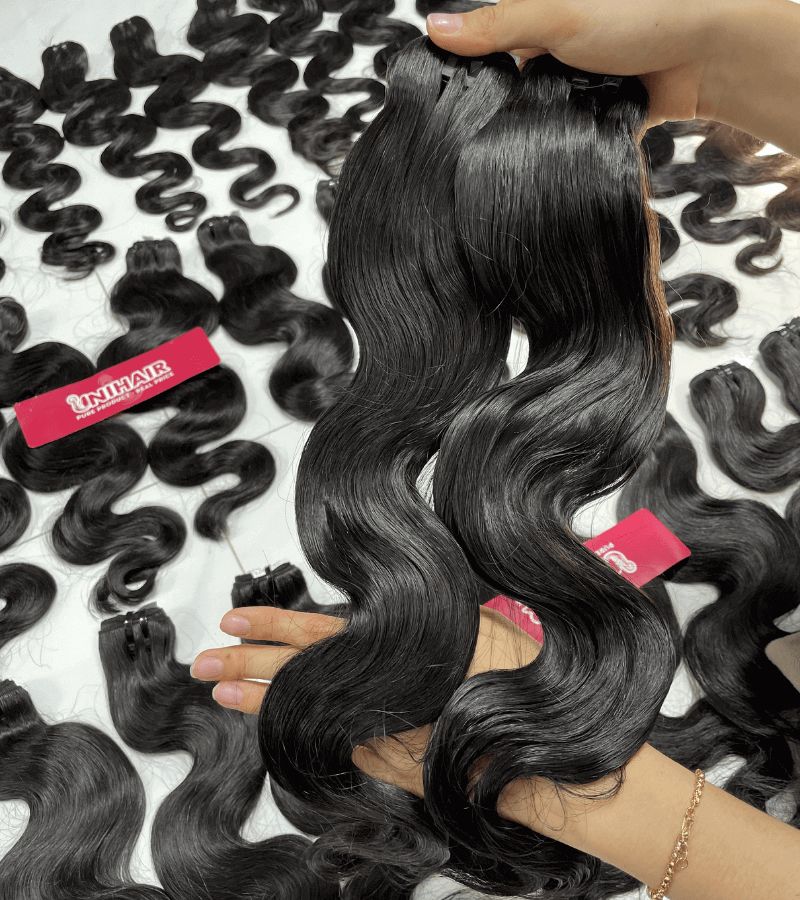
Hair used for wigs typically comes from donors who grow their hair long and healthy. The highest quality wigs often use raw hair, meaning the hair has not been chemically processed before being turned into wigs.
Popular sources of hair include:
- Vietnamese hair
- Indian hair
- Brazilian hair
- Cambodian hair
Among these, Vietnamese raw hair is widely known for its strength, thickness, and durability, making it ideal for premium wigs.
During collection, hair is usually cut in ponytail form so that all strands remain aligned in the same direction. This is important for maintaining the cuticle alignment, which prevents tangling and keeps the wig looking natural. After collection, the hair is bundled and transported to wig factories for further processing.
Step 2: Sorting and Selecting Hair
Once the raw hair arrives at the factory, it goes through a detailed sorting process. Workers carefully separate the hair based on:
- Length
- Texture (straight, wavy, curly)
- Color
- Quality
This step is crucial in the process of how human hair wigs are made, because consistency determines how natural the final wig will look.
For example, if a wig is designed to be 22 inches long, all strands must be sorted to match the desired length range. Any short or damaged hair is removed during this stage. High-end wig manufacturers also sort hair by single donor bundles, ensuring the hair texture remains uniform.
Step 3: Cleaning and Sanitizing the Hair
Before the hair can be used for wig production, it must be thoroughly cleaned and sanitized. The hair is washed using professional cleansing methods to remove:
- Dust
- Oil
- Dirt
- Environmental residues
Factories often use gentle shampoo systems combined with temperature-controlled washing to protect the hair cuticles. After washing, the hair is:
- Conditioned to restore moisture
- Carefully dried
- Combed to remove loose strands
This stage ensures the hair remains soft, shiny, and healthy, which is essential for creating premium wigs.
Step 4: Aligning Hair Cuticles (Drawing Process)
One of the most important steps in how human hair wigs are made is the cuticle alignment process, often called drawing. During this process:
- Hair strands are combed repeatedly
- Short hairs are removed
- All strands are aligned in the same direction
This step creates double-drawn or single-drawn hair bundles.
Single-drawn hair
Contains mixed lengths and looks more natural.
Double-drawn hair
Short hairs are removed so the bundle looks thicker and fuller from root to tip.
Double-drawn hair is often used in luxury human hair wigs because it provides a more voluminous appearance.
Step 5: Creating the Wig Cap
The wig cap is the structure that holds the hair in place. It is another key element when learning how human hair wigs are made. Common wig cap types include:
Lace Front Wigs
Hair is hand-tied onto a lace front section to create a natural hairline.
Full Lace Wigs
The entire cap is made of lace, allowing maximum styling flexibility.
Machine-Made Wigs
Hair is sewn onto wefts and attached to a cap using sewing machines.
Monofilament Wigs
These use a special mesh material that mimics the appearance of the scalp. High-quality wigs often combine lace and hand-tied techniques to achieve the most realistic result.
Step 6: Ventilating Hair (Hand-Tying Process)
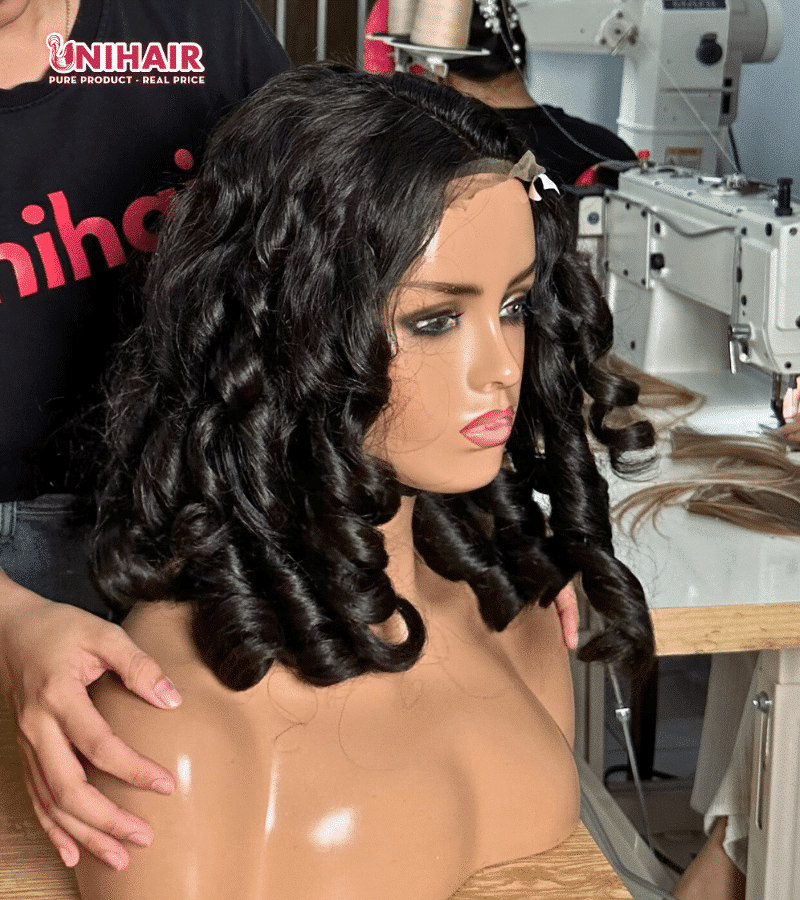
The next step in how human hair wigs are made is called ventilation, where individual strands of hair are tied into the wig cap.
This process is extremely detailed and time-consuming.
Skilled wig makers use a small ventilation needle to:
- Pull a few strands of hair
- Knot them into the lace cap
- Repeat thousands of times
A full lace wig may require 40,000 to 60,000 individual knots. This hand-tied method allows the hair to move naturally, just like real hair growing from the scalp. Because of the labor involved, hand-tied wigs are usually more expensive than machine-made wigs.
Step 7: Sewing Hair Wefts (Machine Construction)
Some wigs are made using sewing machines instead of full hand-tying. In this method:
- Hair is first sewn into wefts
- The wefts are then stitched onto the wig cap
Machine-made wigs are:
- Faster to produce
- More affordable
- Durable for everyday use
However, they may not look as natural as lace wigs or hand-tied wigs. Many manufacturers combine both techniques to balance cost, durability, and realism.
Step 8: Cutting and Styling the Wig
Once the wig construction is complete, the wig moves to the styling stage. Professional stylists shape the wig by:
- Cutting layers
- Trimming the hairline
- Adding texture
The wig may also be styled into different looks such as:
- Straight styles
- Body wave
- Loose wave
- Curly textures
This stage helps ensure the wig is ready to wear for customers.
Step 9: Coloring or Custom Processing (Optional)
Some human hair wigs are left natural, while others undergo coloring or chemical processing. Possible treatments include:
- Bleaching
- Dyeing
- Perming
- Texture enhancement
However, high-quality wigs made from raw human hair often remain unprocessed so that buyers can style or color them themselves.
Step 10: Quality Inspection and Packaging
The final step in how human hair wigs are made is quality control. Each wig is carefully inspected for:
- Hair density
- Knot security
- Cap construction
- Overall appearance
Workers also check for:
- Shedding
- Tangling
- Inconsistent lengths
After inspection, the wigs are washed, conditioned, and packaged before being shipped to distributors or customers worldwide.
Why Human Hair Wigs Are Expensive

After learning how human hair wigs are made, it becomes clear why these wigs are more expensive than synthetic options. Key reasons include:
Labor-Intensive Production
Hand-tying thousands of strands requires skilled craftsmanship.
Limited Raw Hair Supply
High-quality raw hair from single donors is rare.
Long Production Time
Some wigs take several days to produce.
Premium Materials
Natural hair and lace materials increase manufacturing costs. However, the benefits often outweigh the cost. Human hair wigs offer:
- Natural appearance
- Long lifespan
- Heat styling flexibility
- Dyeing capability
How Long Does It Take to Make a Human Hair Wig?
The production time depends on the wig type. Approximate manufacturing time:
| Wig Type | Production Time |
|---|---|
| Machine-made wig | 1–2 days |
| Lace front wig | 2–4 days |
| Full lace wig | 4–7 days |
| Hand-tied custom wig | 1–2 weeks |
The more hand-work involved, the longer the production process.
Tips for Choosing High-Quality Human Hair Wigs

Now that you know how human hair wigs are made, here are a few tips for choosing a quality wig.
Look for Cuticle-Aligned Hair
This prevents tangling and improves durability.
Check Hair Density
Premium wigs have consistent density from root to tip.
Choose Lace Construction
Lace wigs provide the most natural hairline.
Buy From Trusted Suppliers
Reliable manufacturers ensure ethical sourcing and proper processing.
FAQ – How Are Human Hair Wigs Made?
1. How are human hair wigs made step by step?
Human hair wigs are made through several detailed steps. First, raw human hair is collected from donors. The hair is then sorted by length, texture, and quality before being washed and sanitized. After that, the hair cuticles are aligned and prepared for wig construction. The hair is either hand-tied onto lace caps or sewn into wefts and attached to a wig base. Finally, the wig is cut, styled, and inspected before packaging.
2. How long does it take to make a human hair wig?
The time required to make a human hair wig depends on the construction method. Machine-made wigs can take 1–2 days to produce, while lace front wigs may take 2–4 days. Full lace wigs or hand-tied wigs can take 5–10 days or longer because each strand of hair is individually tied into the wig cap.
3. What type of hair is used to make human hair wigs?
Human hair wigs are typically made from natural hair collected from donors. Popular hair types include Vietnamese hair, Indian hair, Brazilian hair, and Cambodian hair. Among these, Vietnamese raw hair is often considered premium because it is thick, strong, and long-lasting.
4. Are human hair wigs made by hand?
Many high-quality wigs are partially or fully handmade. Skilled wig makers use a ventilation needle to hand-tie individual hair strands onto lace caps. This technique allows the wig to move naturally and creates a realistic hairline.
5. Why are human hair wigs expensive?
Human hair wigs are expensive because the production process is labor-intensive and requires real human hair. High-quality wigs can take several days to make and involve skilled craftsmanship, premium materials, and detailed quality control.
Conclusion: The Art Behind How Human Hair Wigs Are Made
So, how are human hair wigs made? The process involves many detailed steps, including collecting raw human hair, sorting and cleaning it, constructing wig caps, hand-tying strands, styling, and conducting strict quality control. Each stage requires skilled craftsmanship and careful attention to transform raw hair into a natural-looking, high-quality wig.
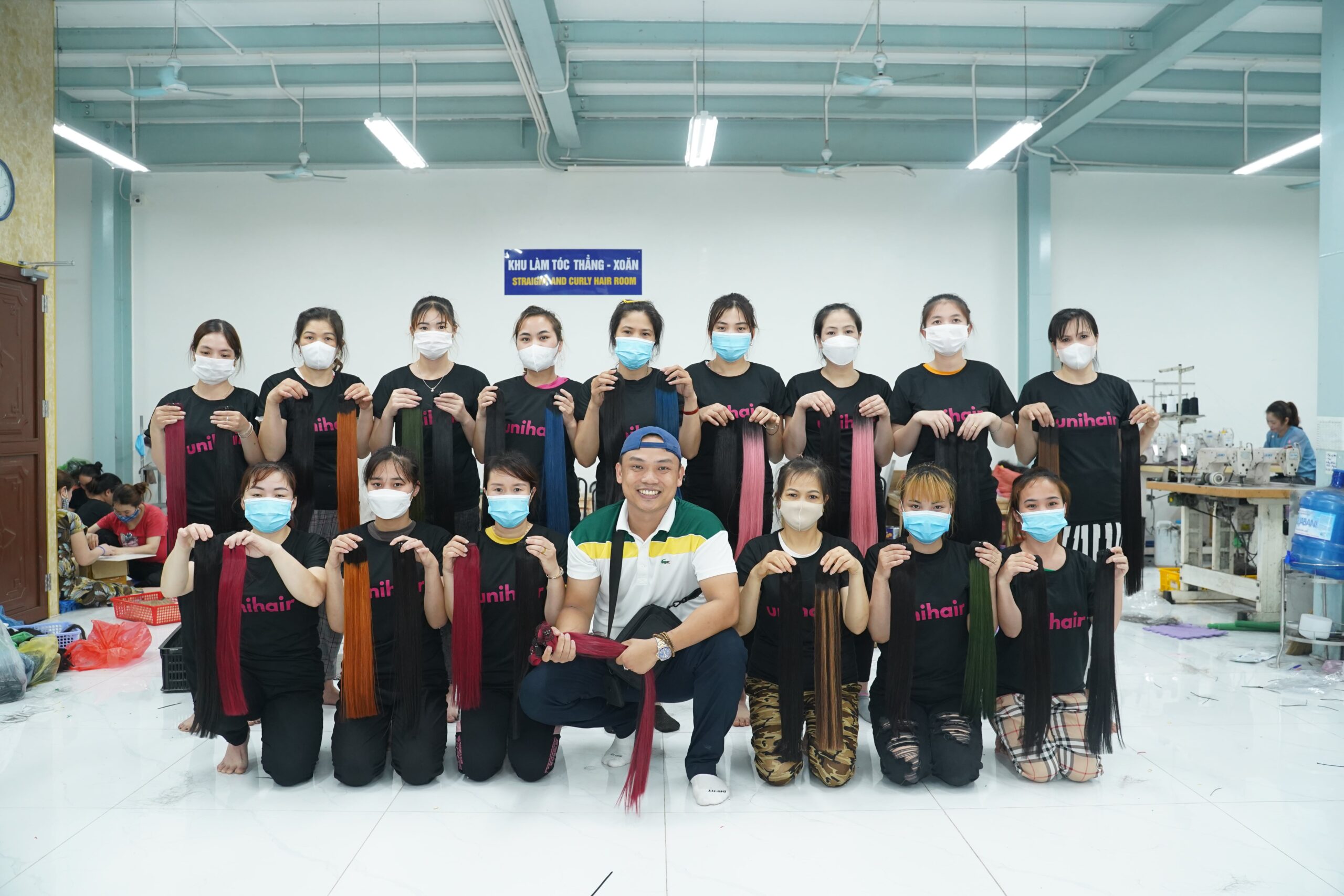
Understanding how are human hair wigs made helps buyers appreciate the work behind premium wigs and choose reliable suppliers. At Unihairvn, a trusted Vietnamese hair factory, every wig is crafted from 100% raw Vietnamese hair with strict quality standards to ensure durability, natural appearance, and long-lasting performance. Whether for fashion, salons, or wholesale businesses, Unihairvn provides high-quality human hair wigs trusted by customers worldwide.